


Trying to decide between cloud computing and cybersecurity for your career?
These two rapidly growing tech fields offer exciting opportunities, but understanding how they relate can be confusing. The truth is, cloud computing and cybersecurity aren’t competing alternatives; they’re complementary specializations that increasingly overlap.
Let’s break down what each field involves and how to decide which path might be right for you.
Cloud Computing vs Cyber Security: Understanding the Difference
Cloud computing centers on delivering computing resources, applications, and services over the internet. Cloud professionals design and manage infrastructure that allows businesses to access computing power without maintaining physical hardware.
Cybersecurity focuses on protecting systems, networks, and data from digital threats. Security professionals identify vulnerabilities, implement protective measures, monitor for threats, and respond to incidents. From a business perspective, these aren’t competing priorities but essential, complementary components of modern IT.
Organizations need both robust cloud infrastructure AND strong security measures working together.
What Is Cloud Computing?
Cloud computing involves designing, deploying, and managing computing resources delivered over the internet. This includes public cloud platforms like AWS and Microsoft Azure, private cloud environments, and hybrid solutions.
Cloud professionals architect scalable infrastructure, optimize performance, implement automation, and ensure services meet business requirements. Common roles include Cloud Architect, Cloud Engineer, and DevOps Engineer.
At ClearFuze’s cloud services, our experts implement customized solutions from hybrid deployments to full cloud migrations, tailored to each business’s specific operational needs.
What Is Cyber Security?
Cybersecurity protects digital assets from threats across multiple domains including network security, application security, data protection, and identity management. Security professionals identify vulnerabilities, implement controls, monitor systems, investigate incidents, and ensure compliance with security standards.
Common roles include Security Analyst, Penetration Tester, and Security Engineer.
ClearFuze’s cybersecurity services deliver this expertise through CISSP-certified professionals who implement comprehensive security measures for businesses across Los Angeles.
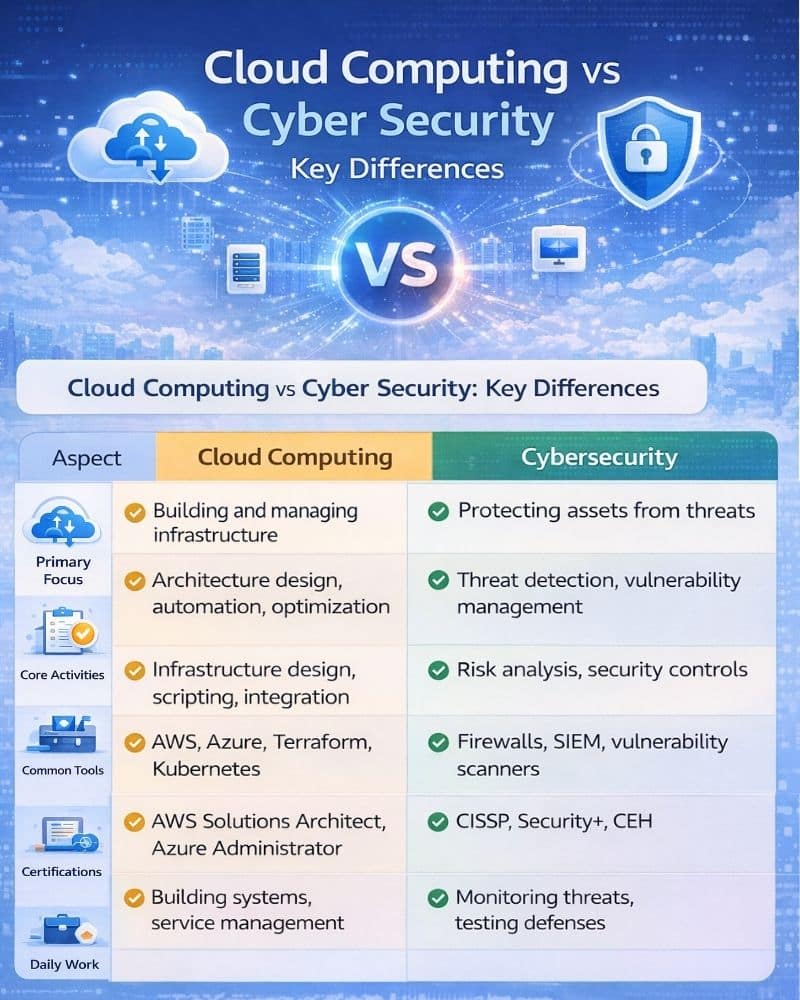
Cloud Computing vs Cyber Security: Key Differences
| Aspect | Cloud Computing | Cybersecurity |
| Primary Focus | Building and managing infrastructure | Protecting assets from threats |
| Core Activities | Architecture design, automation, optimization | Threat detection, vulnerability management |
| Key Skills | Infrastructure design, scripting, integration | Risk analysis, security controls |
| Common Tools | AWS, Azure, Terraform, Kubernetes | Firewalls, SIEM, vulnerability scanners |
| Certifications | AWS Solutions Architect, Azure Administrator | CISSP, Security+, CEH |
| Daily Work | Building systems, service management | Monitoring threats, testing defenses |
While distinct, these fields increasingly overlap, a growing specialization, cloud security, sits at this intersection.
Career Perspective: Should You Choose Cloud Computing or Cyber Security?

When deciding between these fields, consider:
- Interests: Do you prefer building systems (cloud), or solving security challenges (cybersecurity)?
- Work Style: Cloud roles often involve more project-based work, while security tends toward ongoing vigilance.
- Job Market: Both fields show strong demand, with cybersecurity reporting near-zero unemployment and cloud skills remaining highly sought after.
- Salary Potential: Both fields offer excellent compensation, with experienced professionals easily commanding six-figure salaries.
Many professionals eventually develop expertise in both areas, particularly as cloud security becomes increasingly important.
Business Perspective: Why You Need Both Cloud and Security
From a business standpoint, treating cloud and security as an either/or choice creates significant risks. Implementing cloud without appropriate security creates vulnerabilities.
The shared responsibility model means customers remain responsible for securing their applications and data. Conversely, focusing on security without leveraging cloud capabilities limits an organization’s agility and competitive edge.
The ClearONE managed services platform demonstrates this integrated approach, with our teams providing both cloud expertise and robust security in a unified service.
A 40-person financial services firm in Los Angeles discovered when working with ClearFuze that the question isn’t “cloud or security?” but “how do we implement both effectively?”
Cloud Security: Where These Fields Converge
Cloud security represents the natural convergence of cloud computing and cybersecurity, focusing specifically on protecting cloud environments, applications, and data. Cloud security professionals need expertise in both domains, understanding both cloud architecture and security principles.
They implement controls designed for cloud environments, monitor for cloud-specific threats, and manage the unique risks of distributed computing. This convergence means professionals from either background can transition into cloud security roles by developing complementary skills.
How to Get Started in Cloud Computing or Cyber Security
Ready to begin your journey? Here’s how to get started:
For Cloud Computing:
- Certifications: Start with AWS Certified Cloud Practitioner or Azure Fundamentals
- Hands-on Practice: Set up free tier accounts with major cloud providers
- Entry Paths: Consider starting in general IT roles before transitioning to cloud
For Cybersecurity:
- Certifications: CompTIA Security+ is a great starting point
- Hands-on Practice: Set up a home lab and participate in capture-the-flag competitions
- Entry Paths: Often begins with IT support or network administration roles
Many professionals find that gaining experience in one area creates natural opportunities to expand into the other over time.
Frequently Asked Questions
Which pays more: cloud computing or cyber security?
Both fields offer excellent compensation with national averages around $120,000-$130,000 for experienced professionals. Location, experience, and specialized skills impact earnings more than choosing between these fields.
Is cloud computing easier than cyber security?
Neither field is inherently easier, both require continuous learning and present complex challenges. Your background and natural aptitudes will determine which you find more accessible.
Can you do both cloud computing and cyber security?
Absolutely! Many professionals develop expertise in both domains, particularly as organizations increasingly need cloud security specialists who understand both areas.
Which has better job prospects: cloud or security?
Both fields show excellent job prospects with consistent growth projected through 2030. Either choice offers strong career potential with numerous opportunities for advancement.
Final Thoughts
Whether you choose cloud computing, cybersecurity, or a path incorporating both, you’re entering fields with tremendous opportunity.
The digital economy depends on both robust infrastructure and strong security; making both specializations valuable.
For Los Angeles businesses seeking to implement effective cloud and security strategies, ClearFuze’s virtual CIO services offer strategic guidance integrating both domains. Ready to learn more? Contact our team to discuss your organization’s technology needs or to explore potential career paths in these exciting fields.


